Besides the imperfections, the golden age of flying, a period in aviation history roughly spanning from the late 1940s to the 1970s, represents a striking chapter in the history of flying. It was a time when air travel captured the imagination of the world and embodied the spirit of adventure, innovation, and aspiration.
Flying was a symbol of prestige and not everyone could afford to purchase a plane ticket, no matter the destination.
Life on board used to be completely different than it is today, and if you feel like you are riding in a bus but in the sky while flying these days, in the past, the experience of flying was all about glamour and luxury.
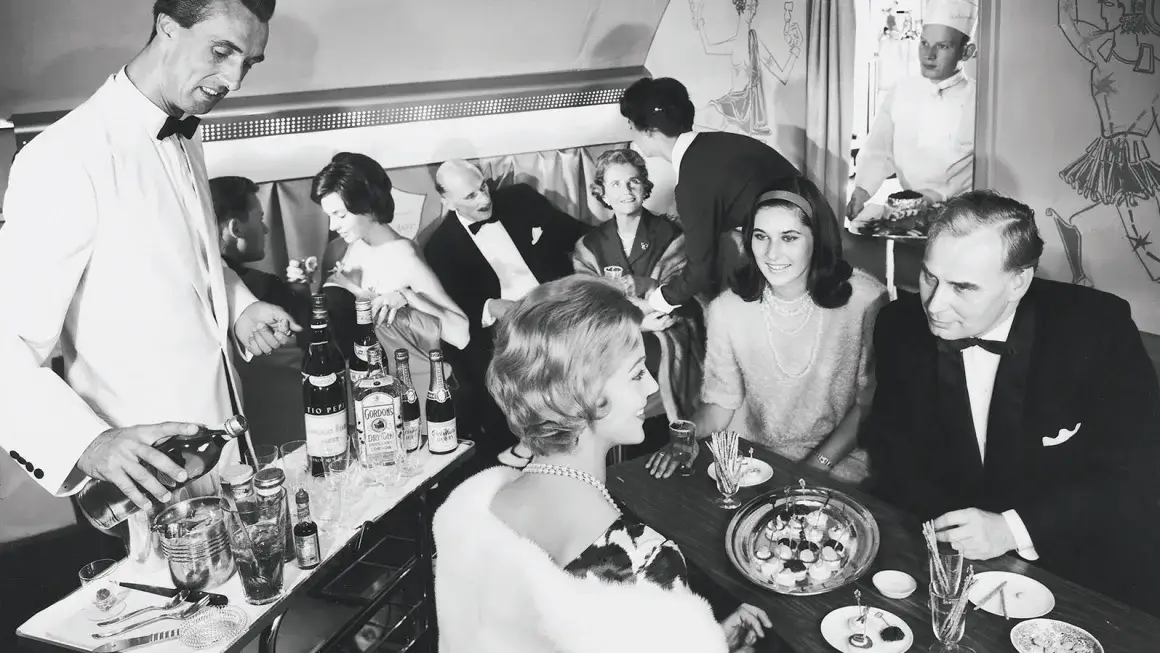
Graham M. Simons, an aviation historian, recalls, “Air travel at that time was something special. It was luxurious. It was smooth. And it was fast.” The seats were spacious, and passengers were offered cocktail lounges, five course meals, and an endless flow of champagne. “People dressed up because of it. The staff was literally wearing haute couture uniforms. And there was much more space: seat pitch – that’s the distance between the seats on the aircraft – was probably 36 to 40 inches. Now it’s down to 28, as they cram more and more people on board.”
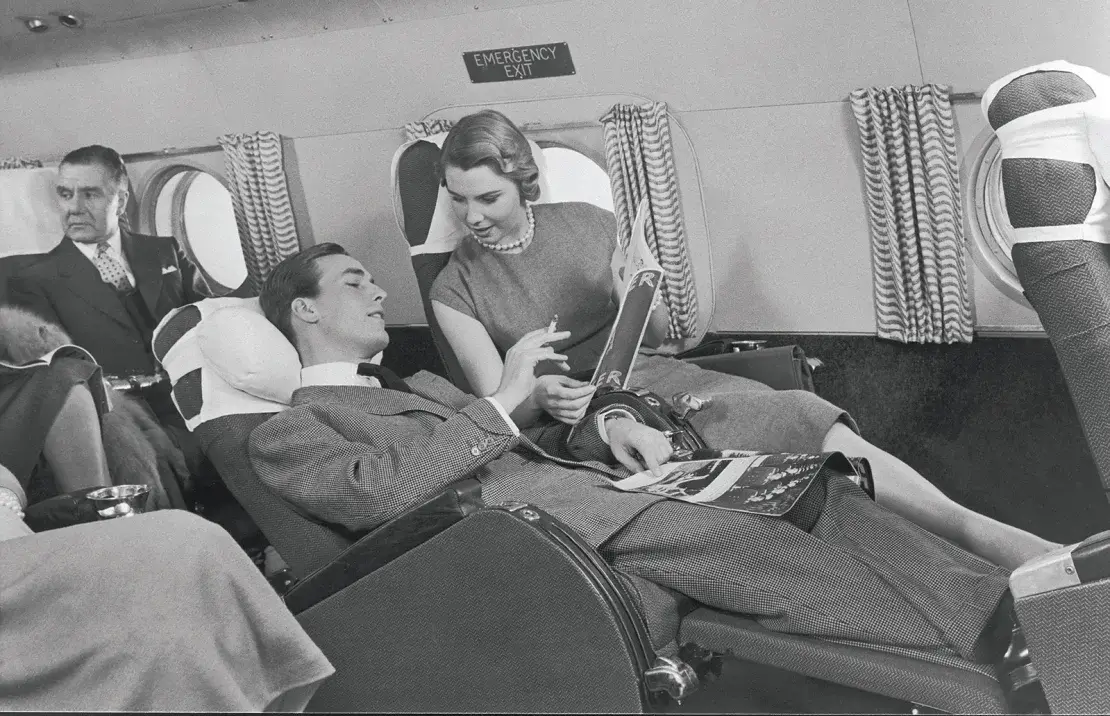
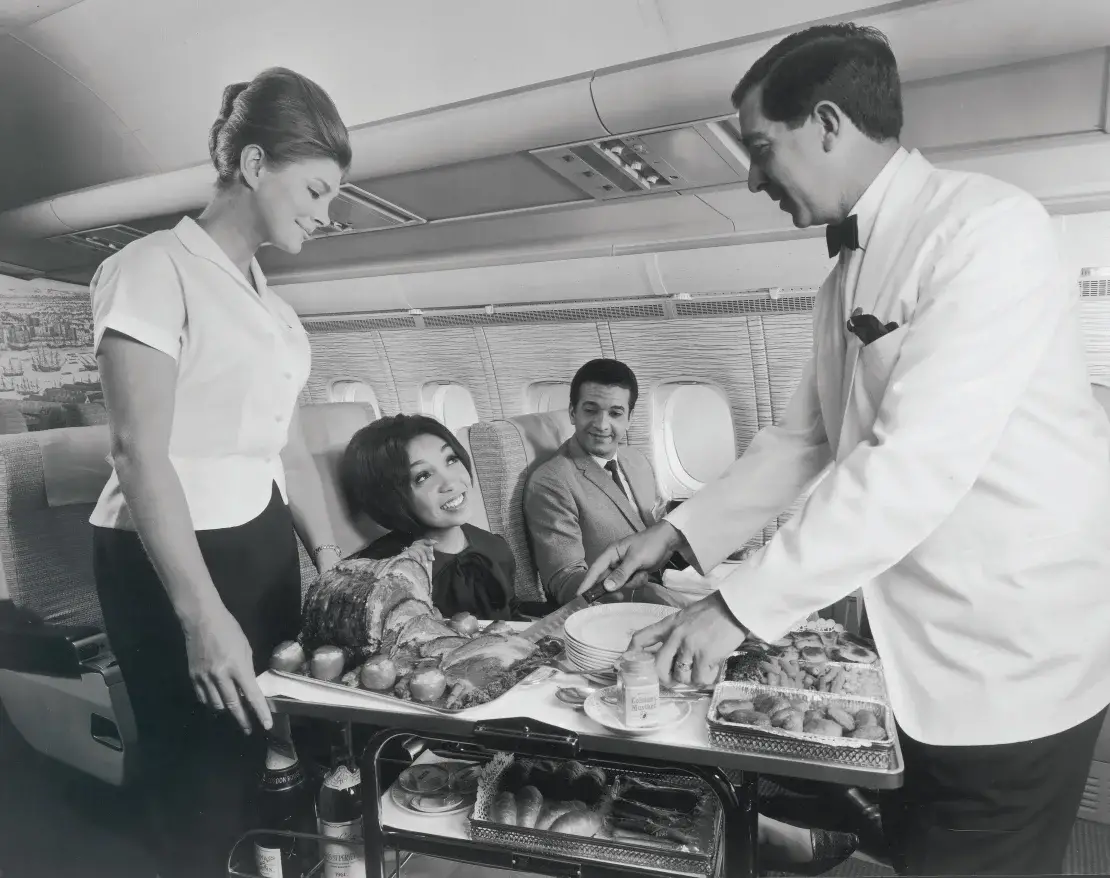
The rules and the security weren’t as strict, so flying brought passengers a sense of freedom. “It was like going to a cocktail party. We had a shirt and tie and a jacket, which sounds ridiculous now, but was expected then,” Keith Lovegrove, a fan of old-fashioned flying said.
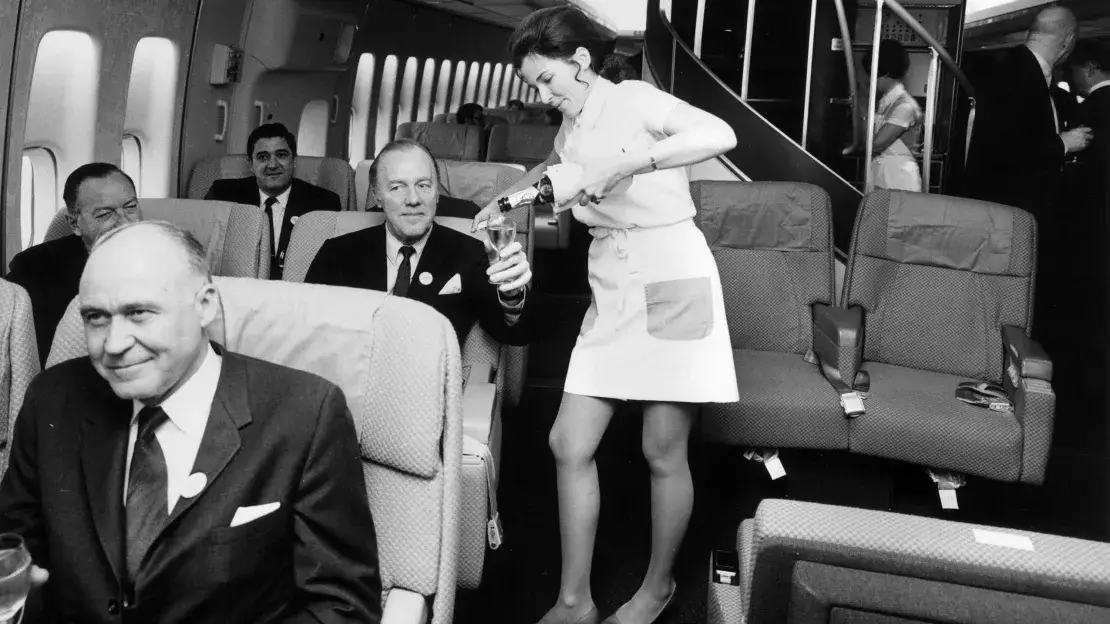
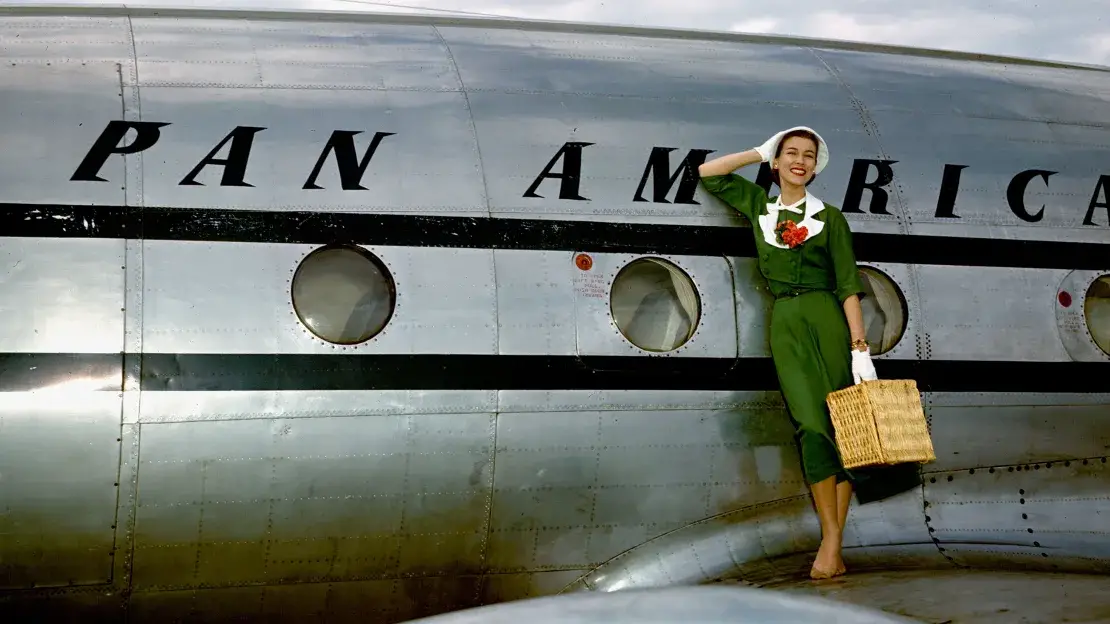
The flight attendants were dressed to impress. They were expected to provide exceptional service while adhering to strict appearance and behavioral standards. Airlines imposed requirements on attire, hair length, weight, and even marital status. Uniforms became increasingly revealing by the 1960s, reflecting the era’s emphasis on presentation.
Although safety was nowhere near as good as today, everything else made flying an exceptional experience during the Golden Age of flying.